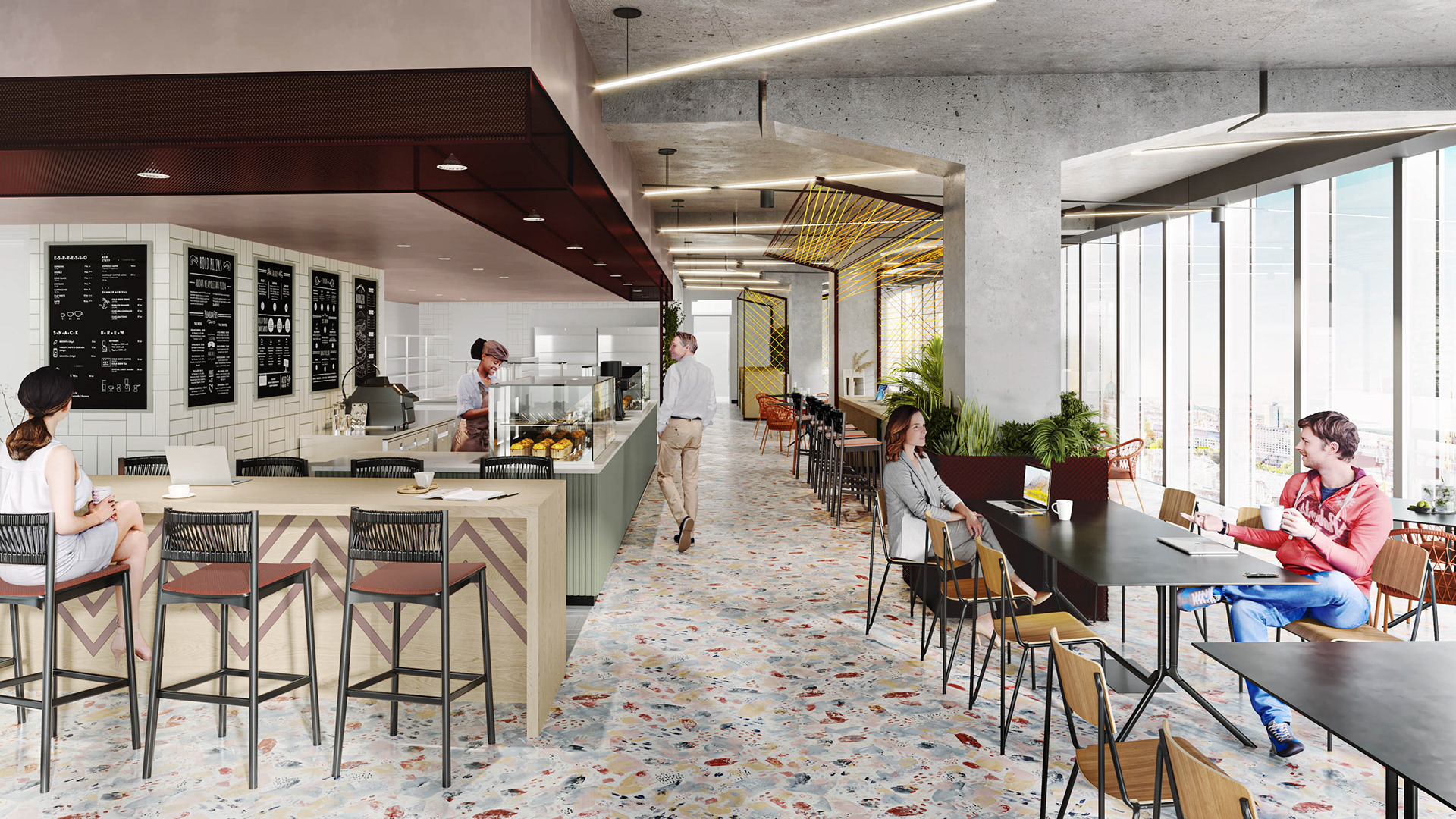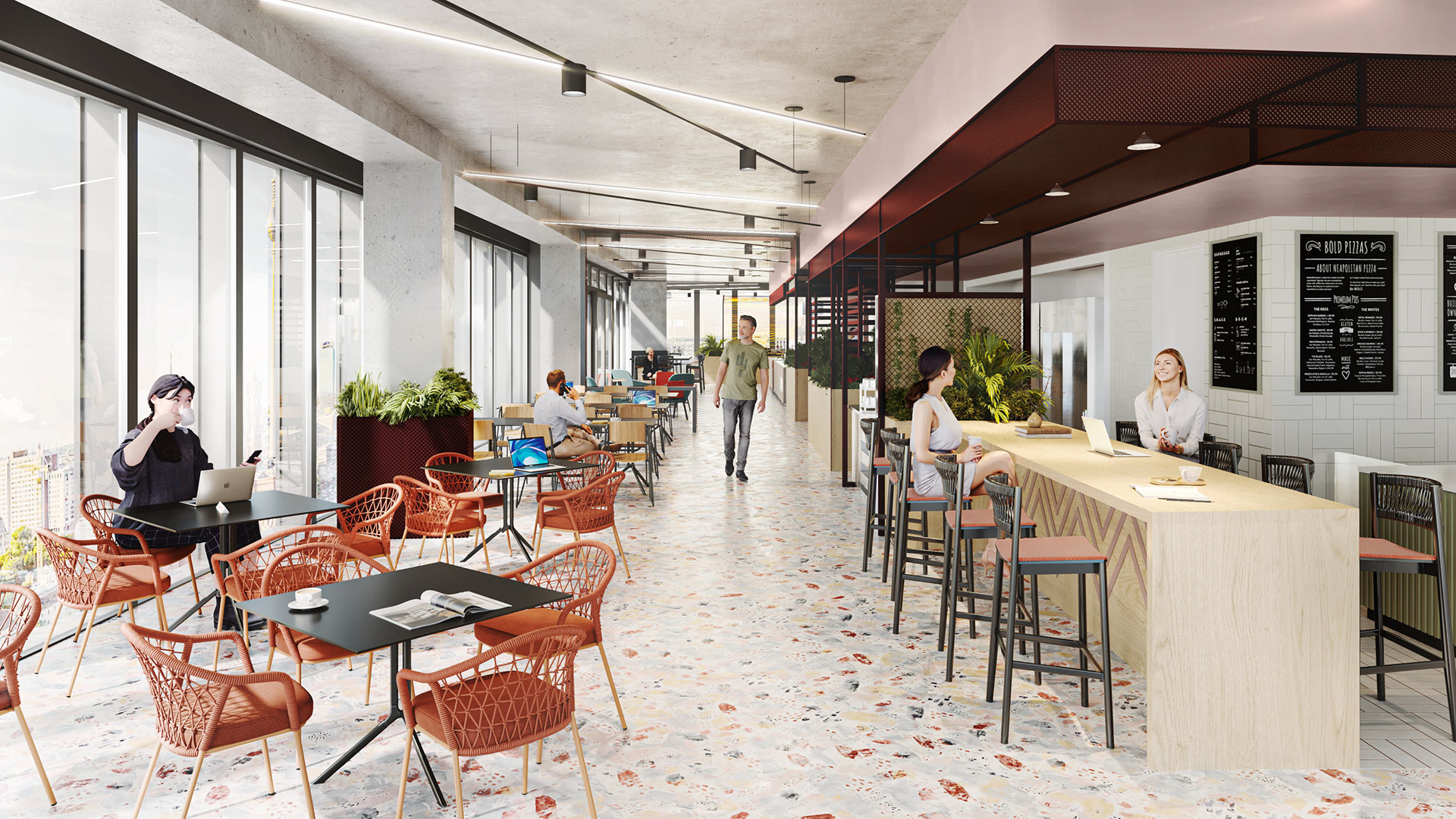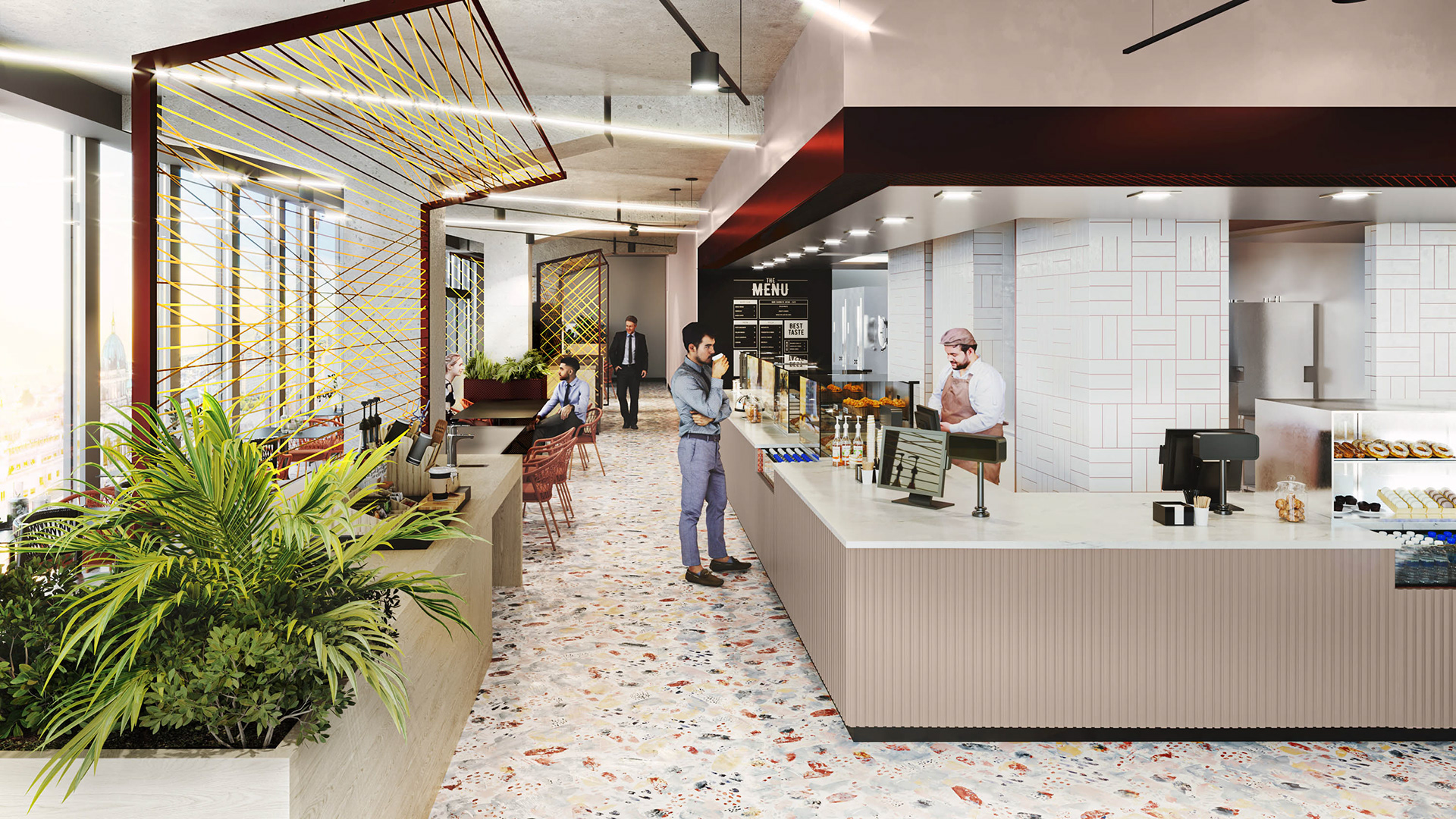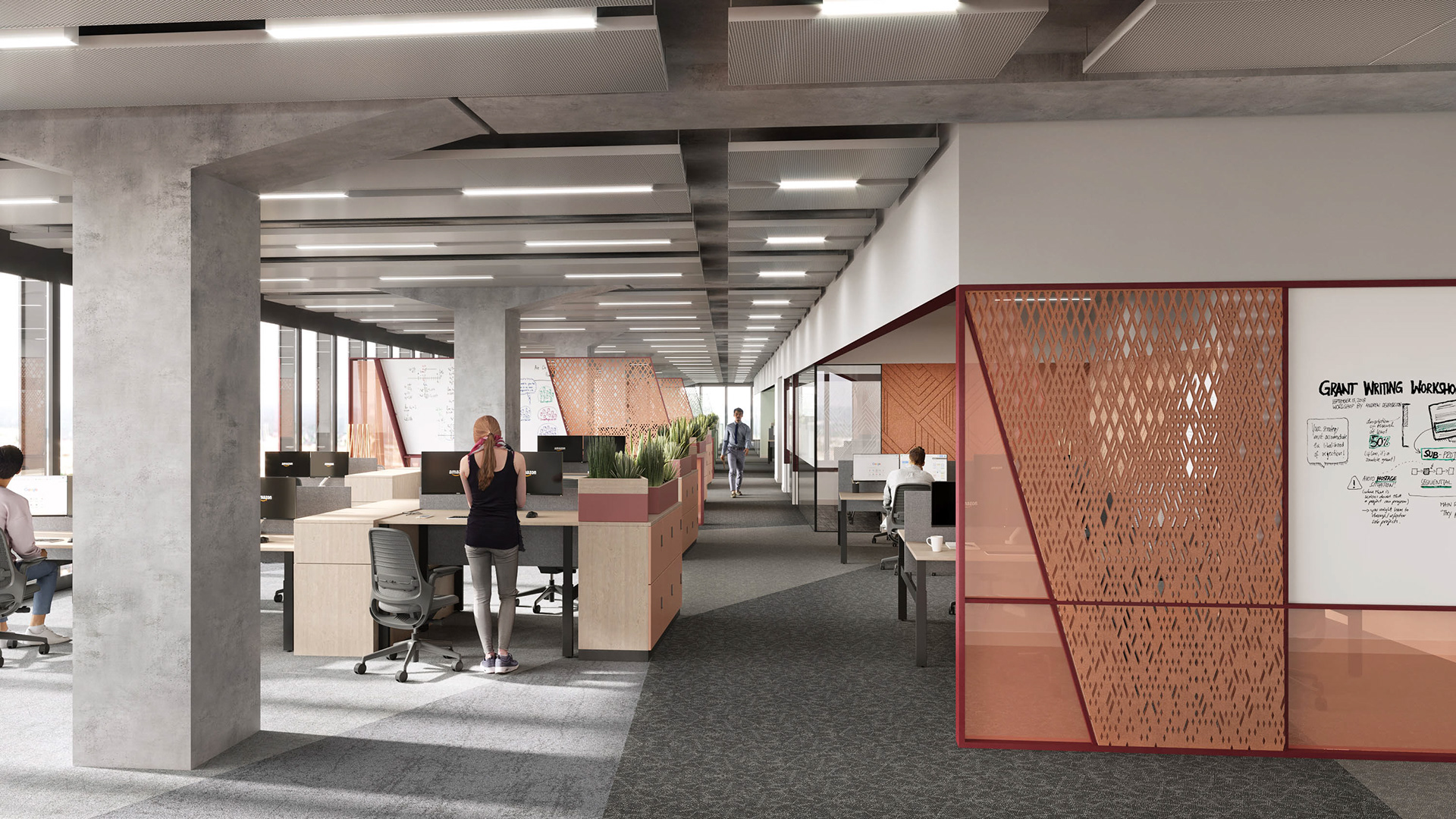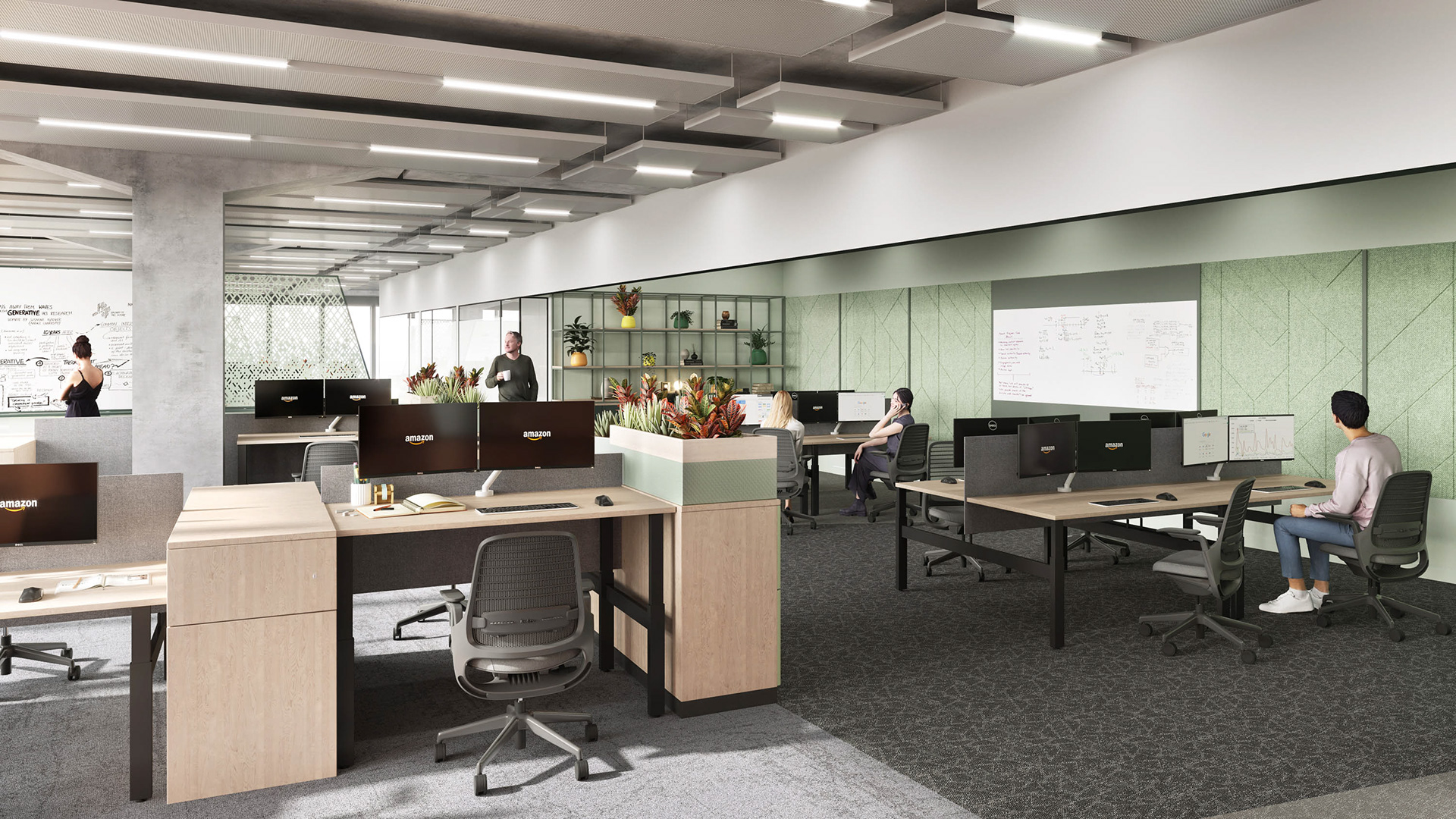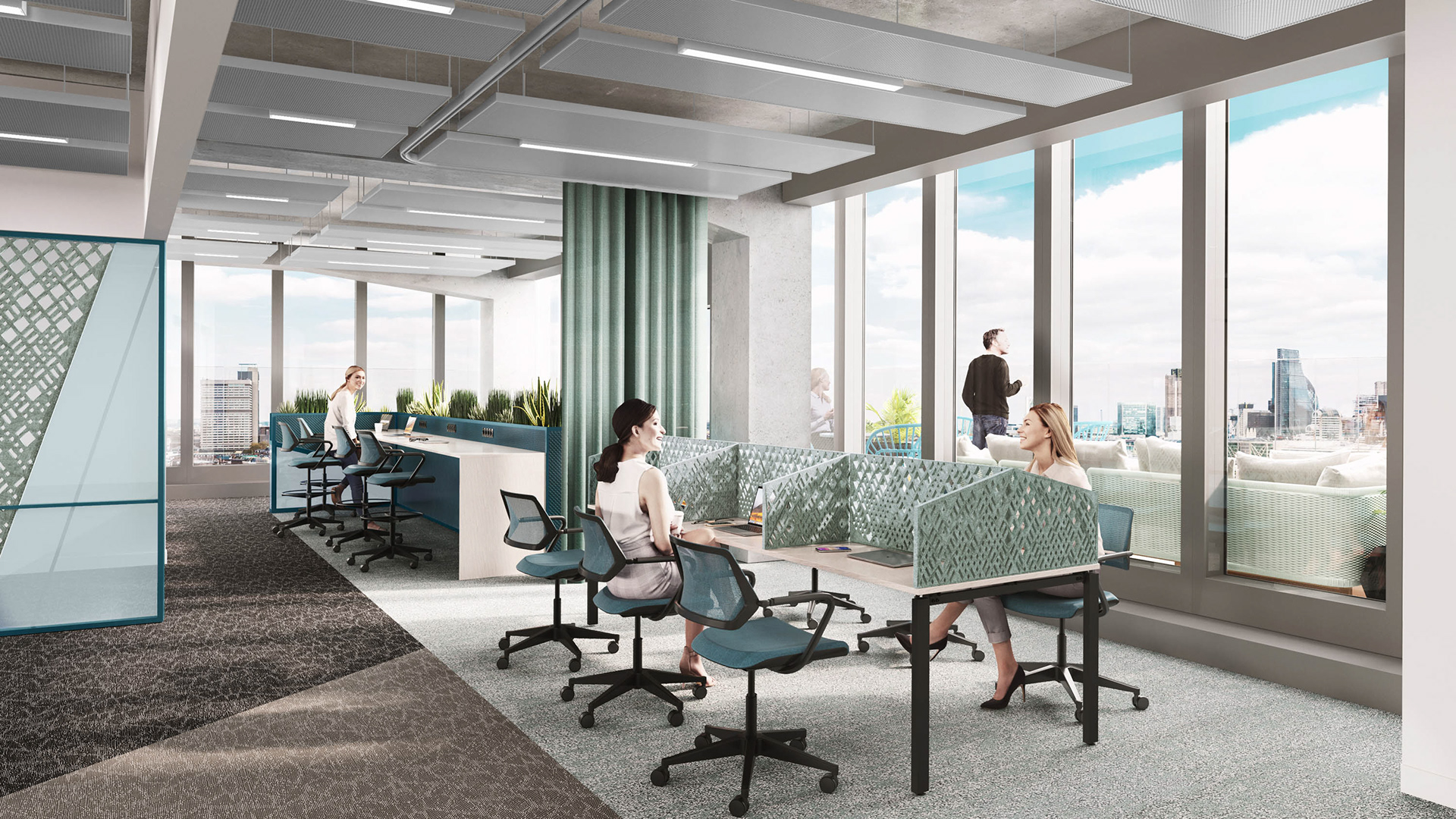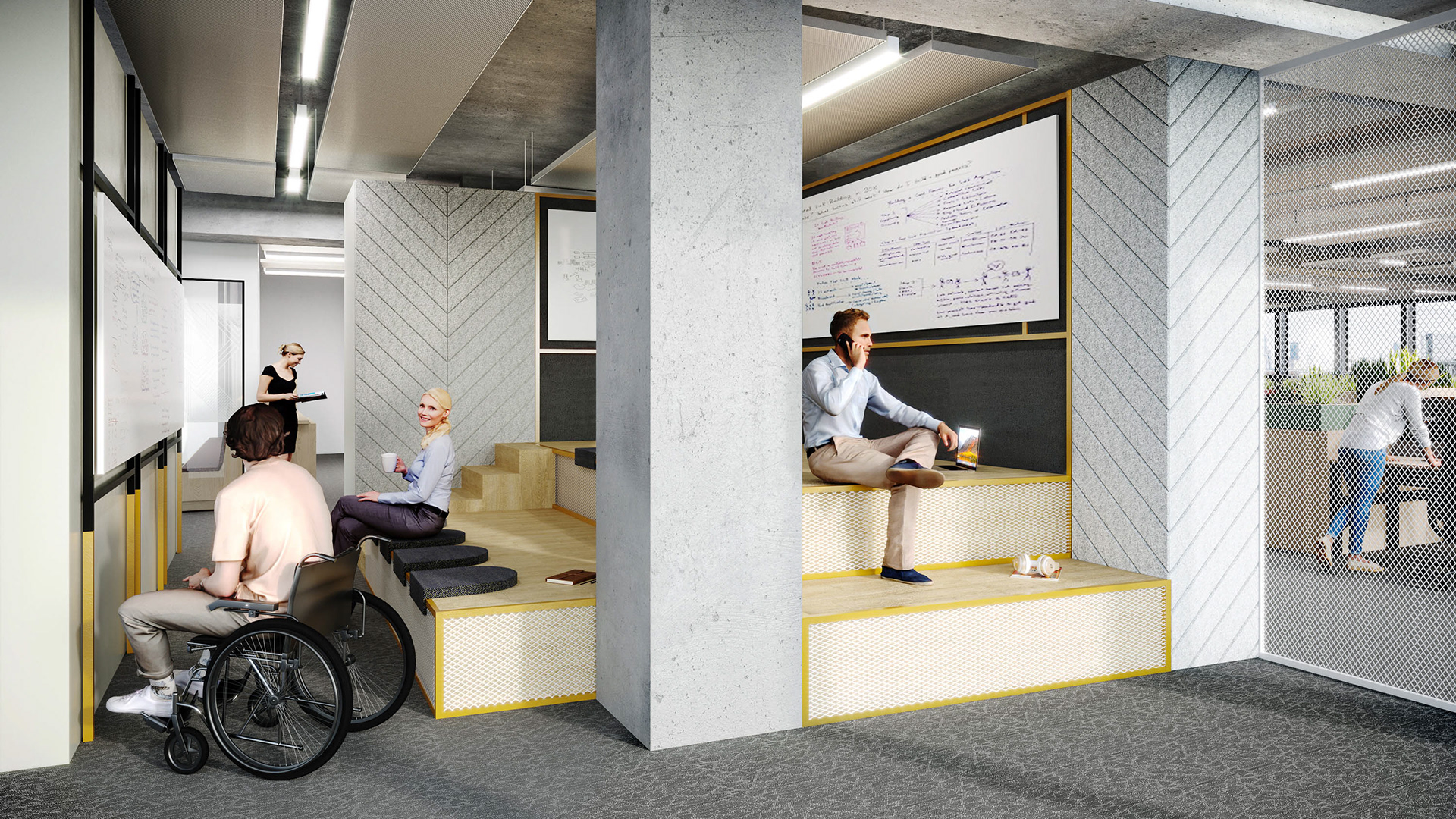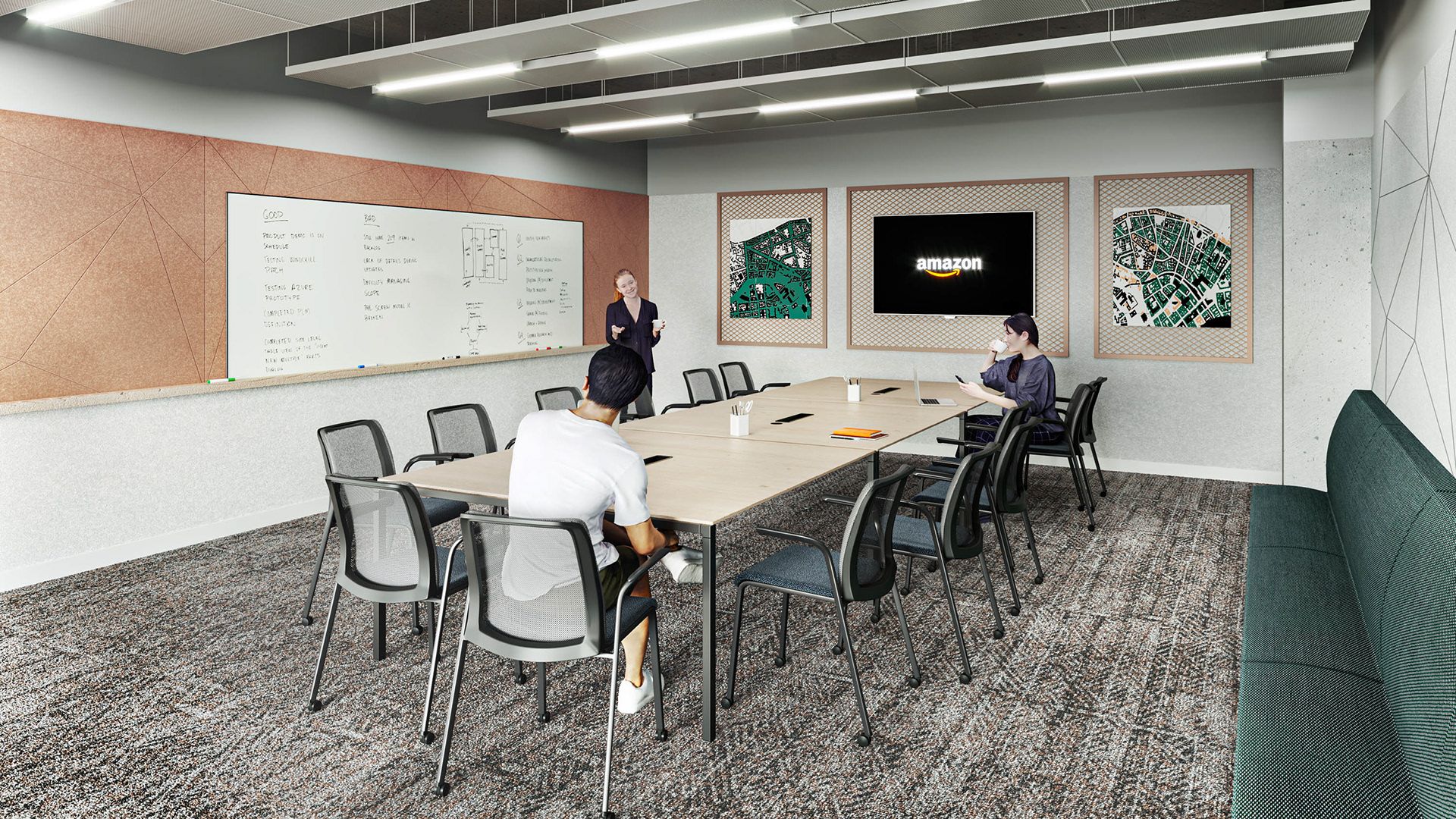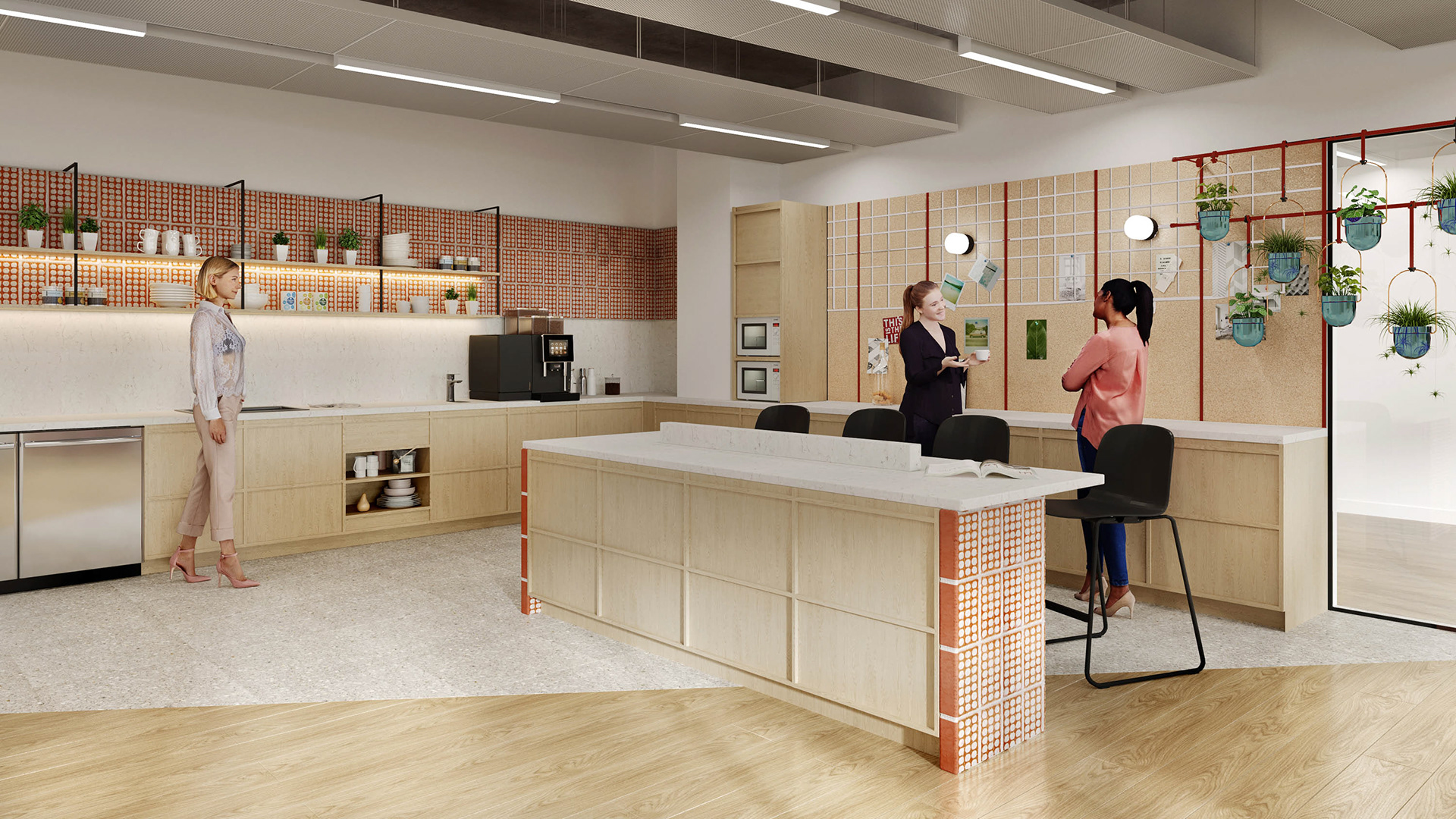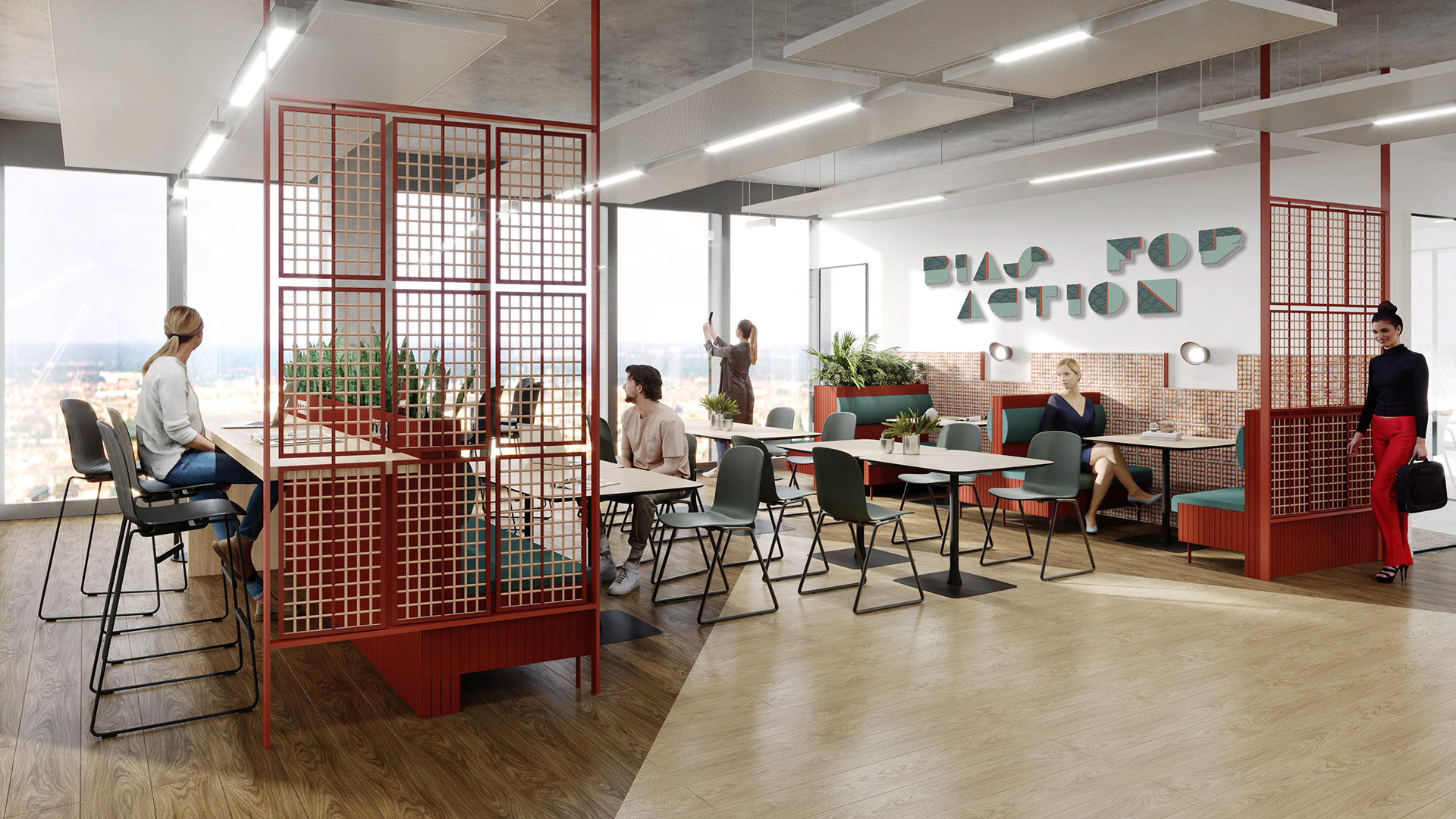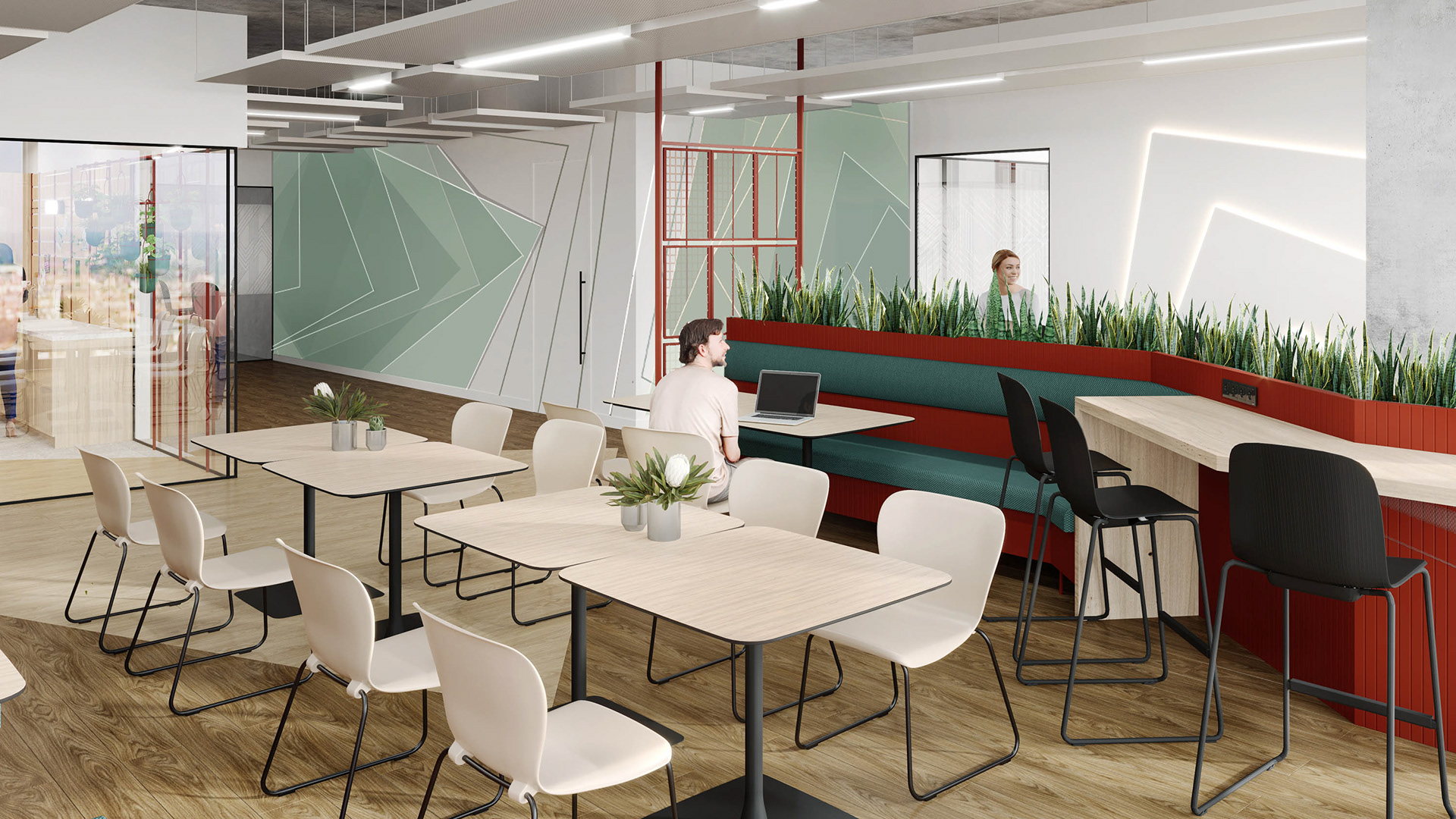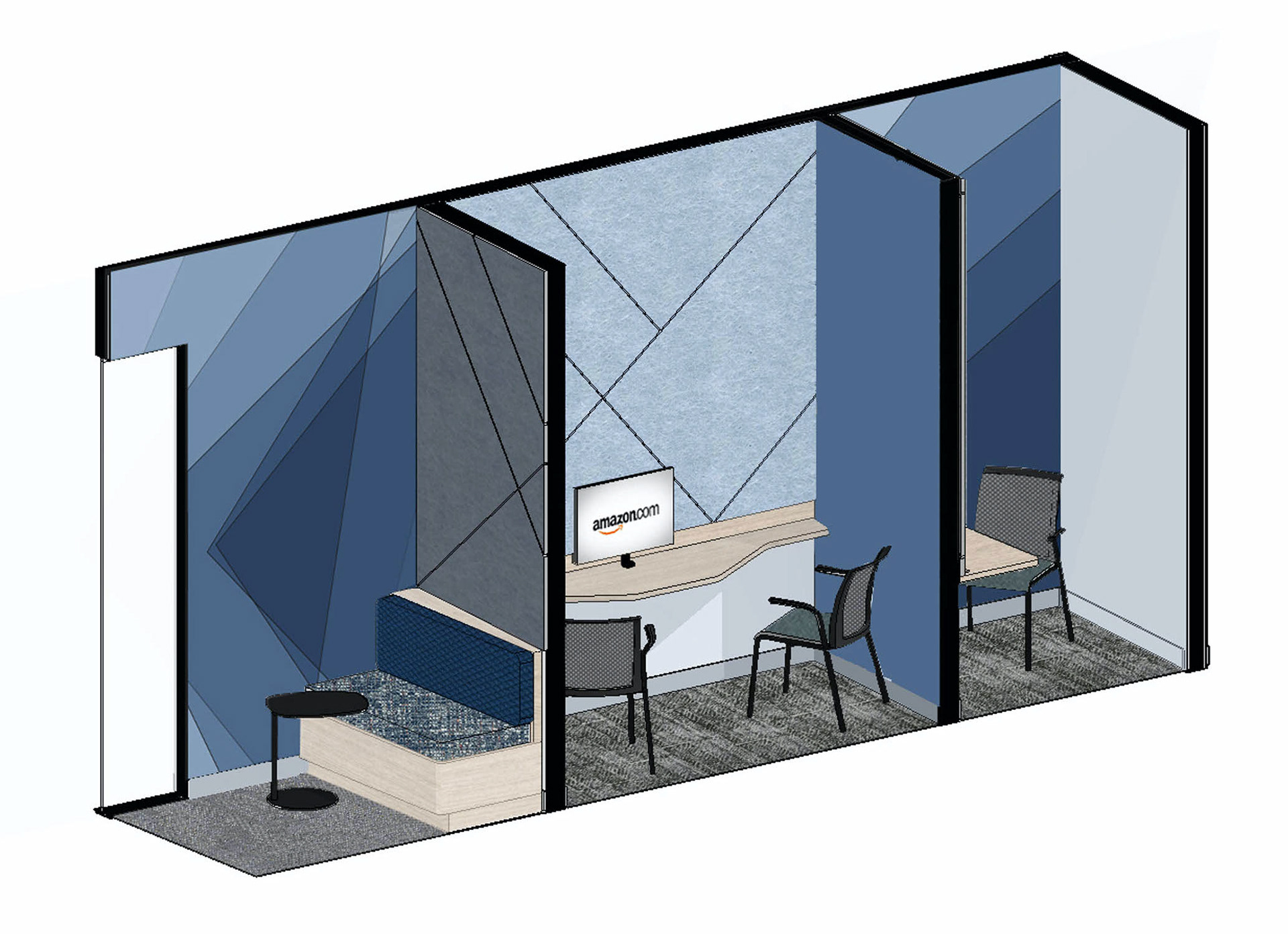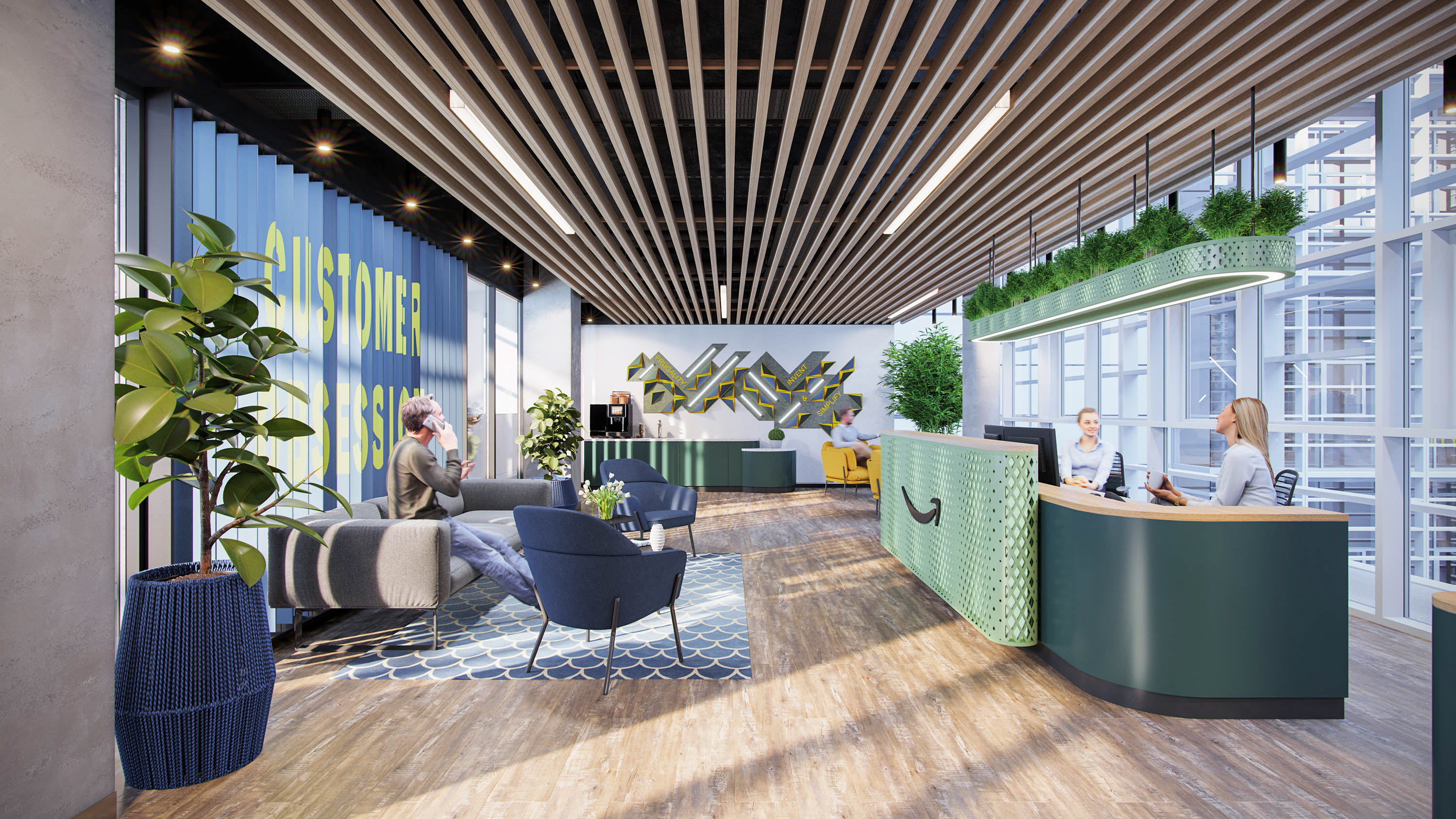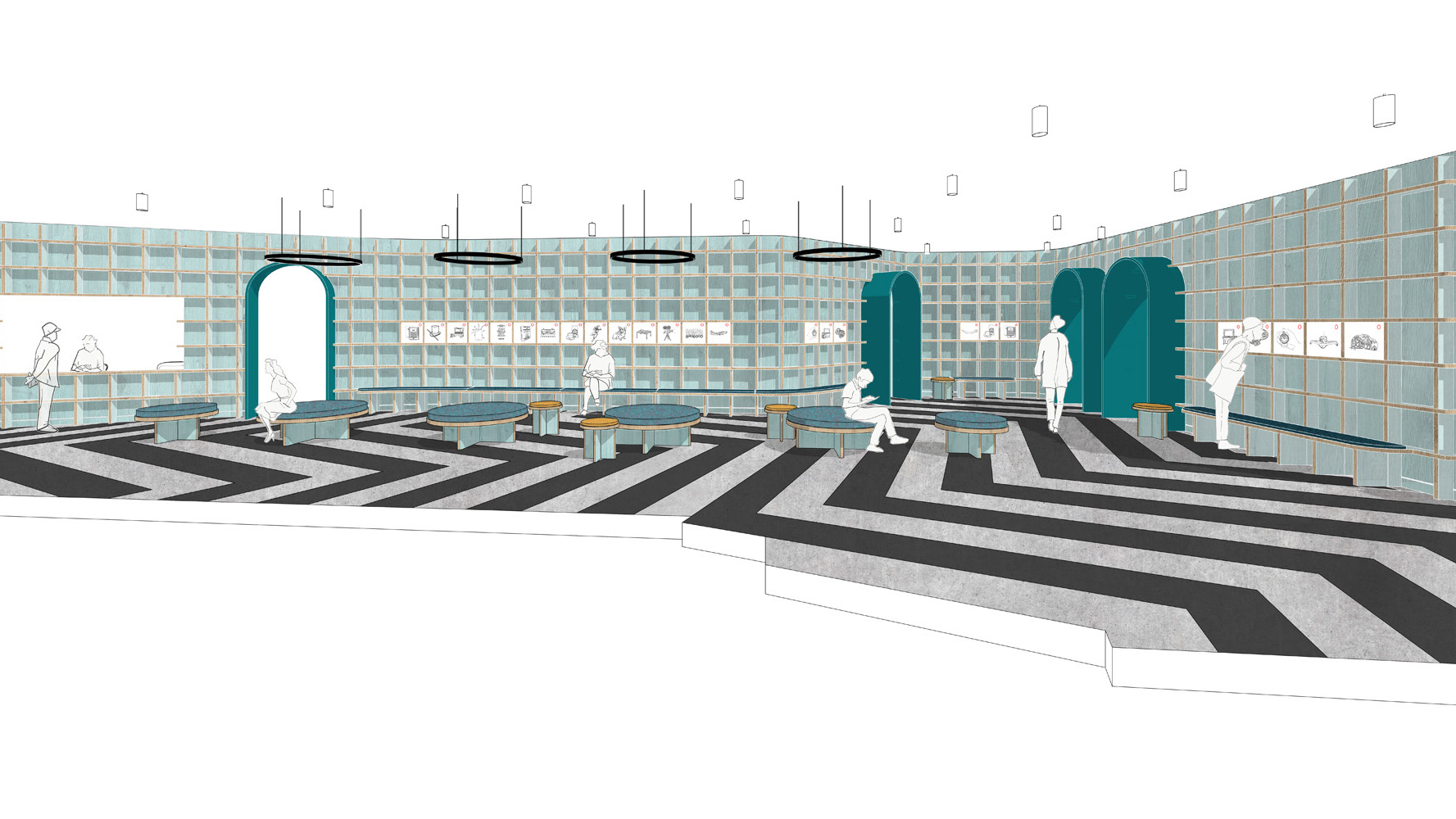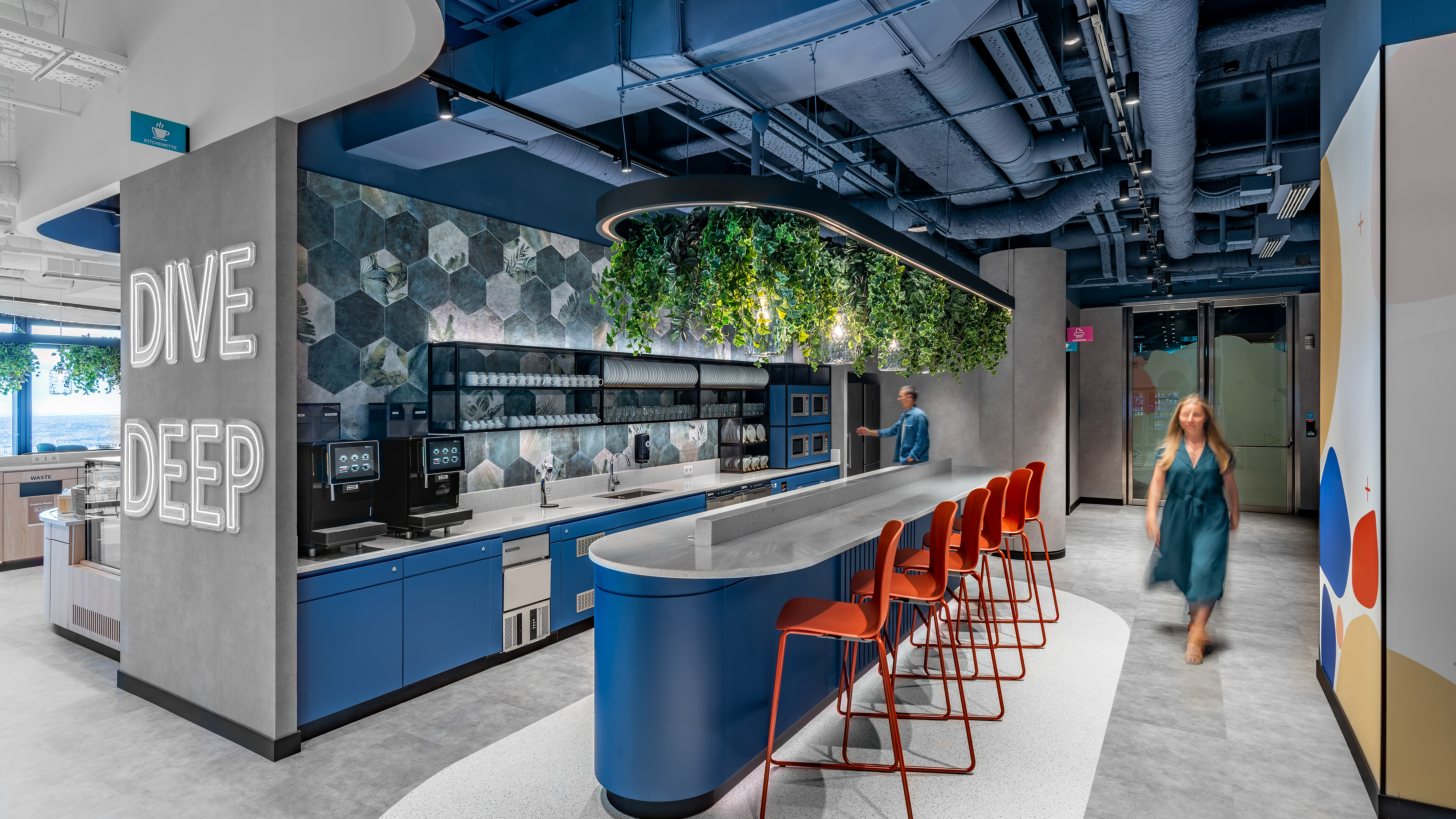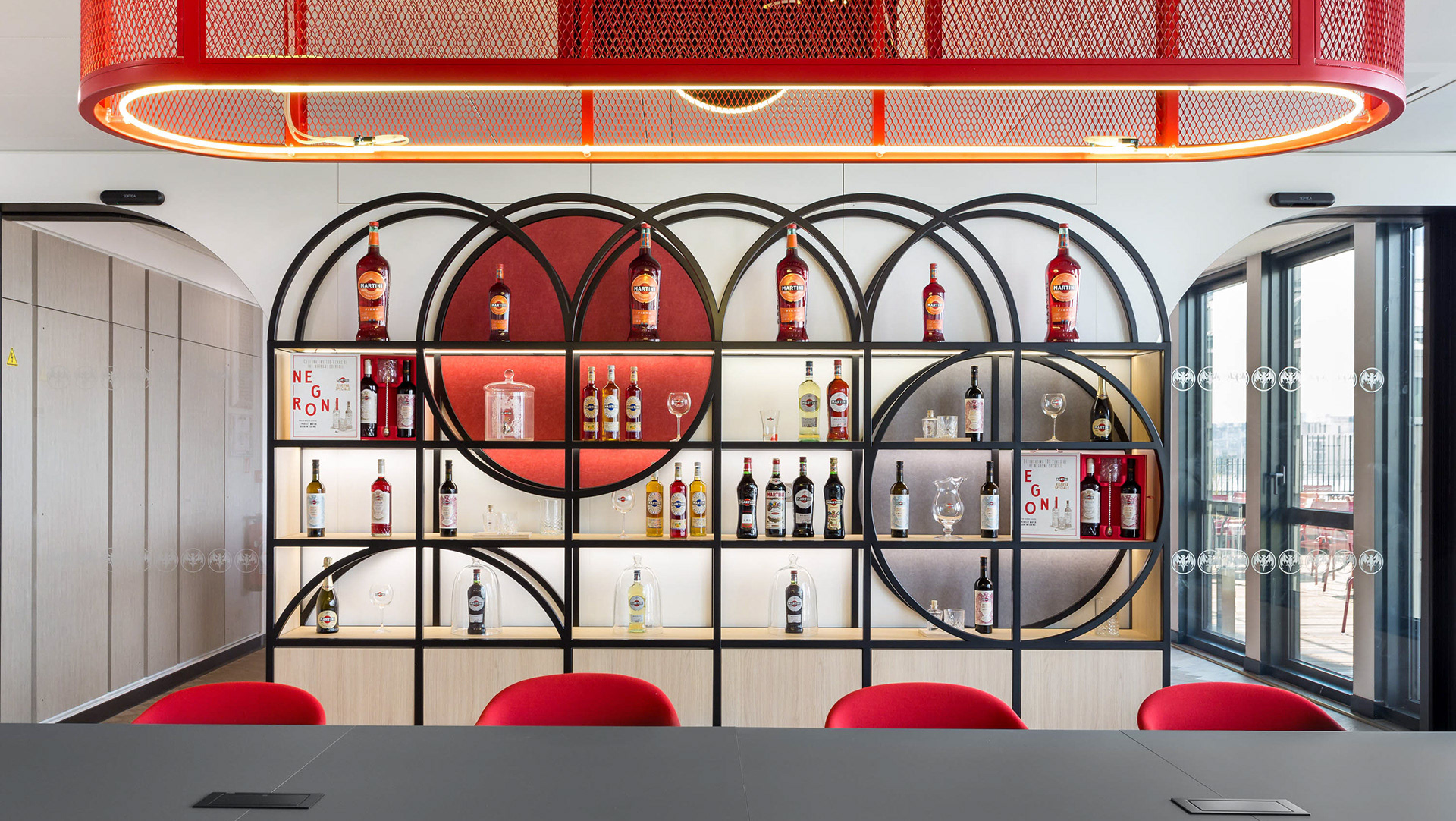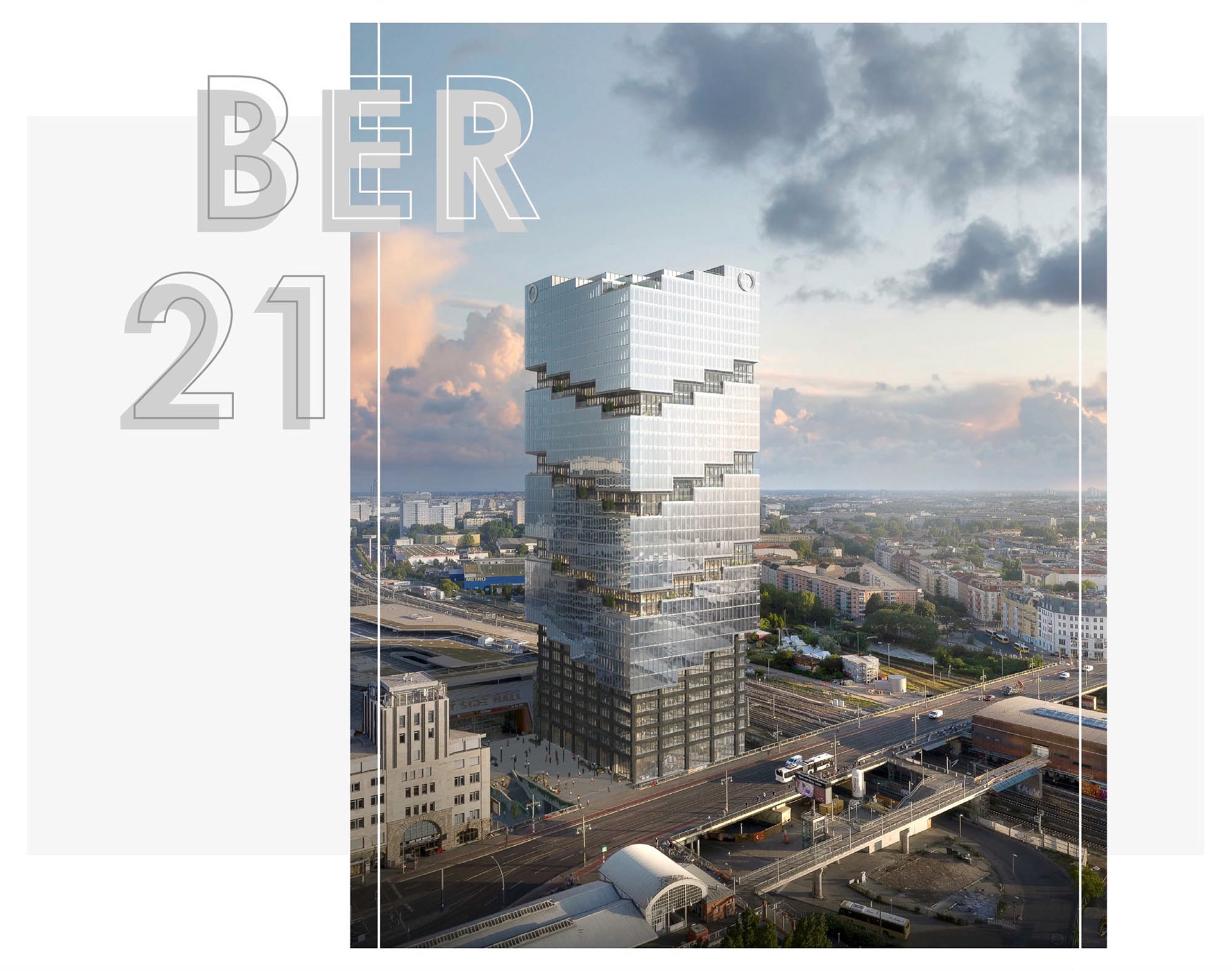
BER21 is a large Amazon campus building located on 3500 sqm plot in East Berlin that is due to be completed in 2025. The building extends over 35 floors, most of which are office spaces and remaining five are dedicated for the different amenity spaces. In such scale of a project, the big question was how to die it all together into one integral space while keeping it varied, interesting and well-functioning at the same time. The point of departure was to create a sufficiently flexible concept that would not generate a construction and maintenance chaos but would also be versatile, long lasting and user-friendly.
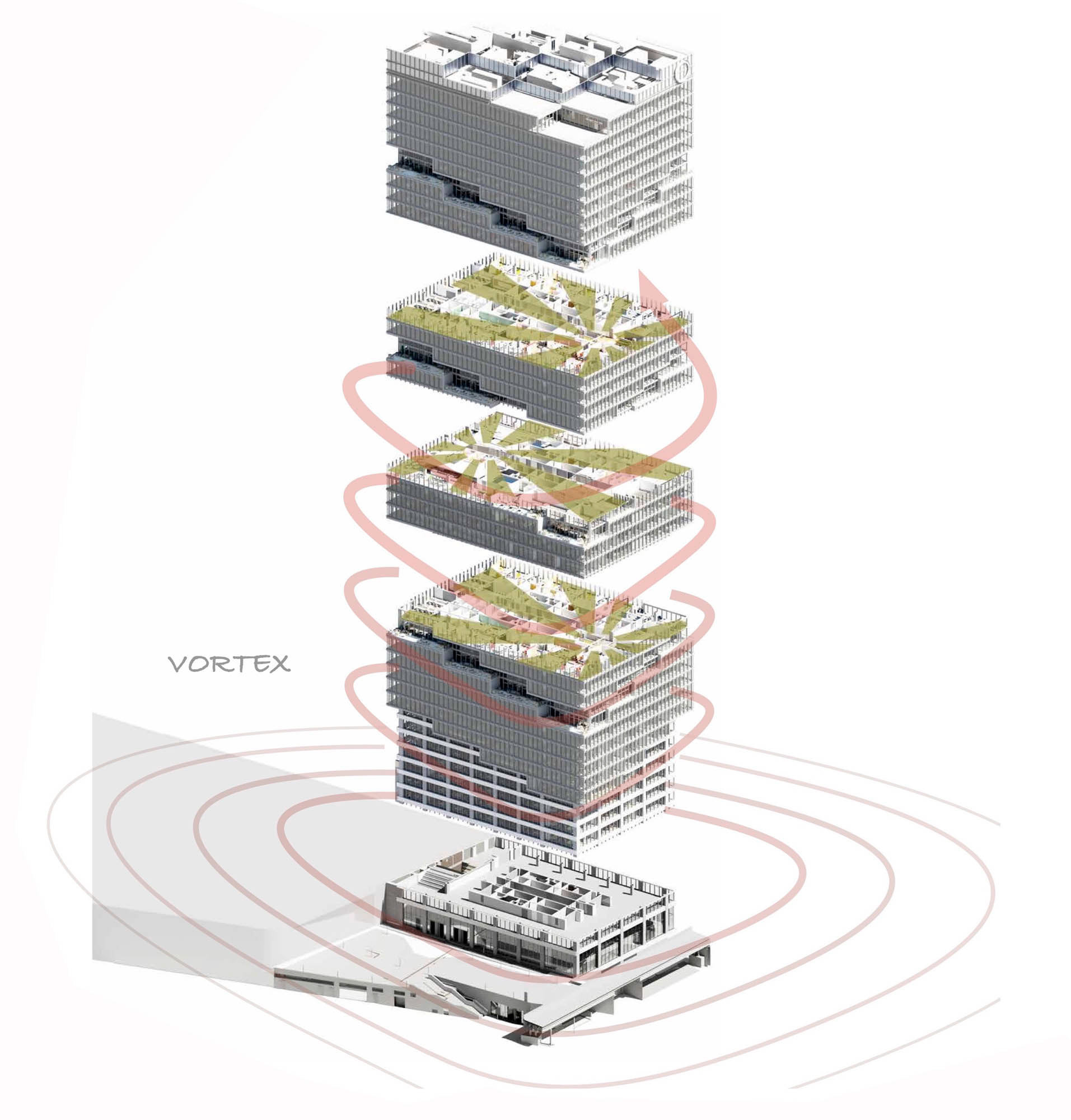
Thus the overarching concept of the project became Vortex, inspired by the building’s architectural language and celebrating the site’s focal and underlying importance to the client. As an additional layer to the main concept, an idea of urban voids within the vortex has been used, creating a variety of unique spaces, inspired by the surroundings of the site.
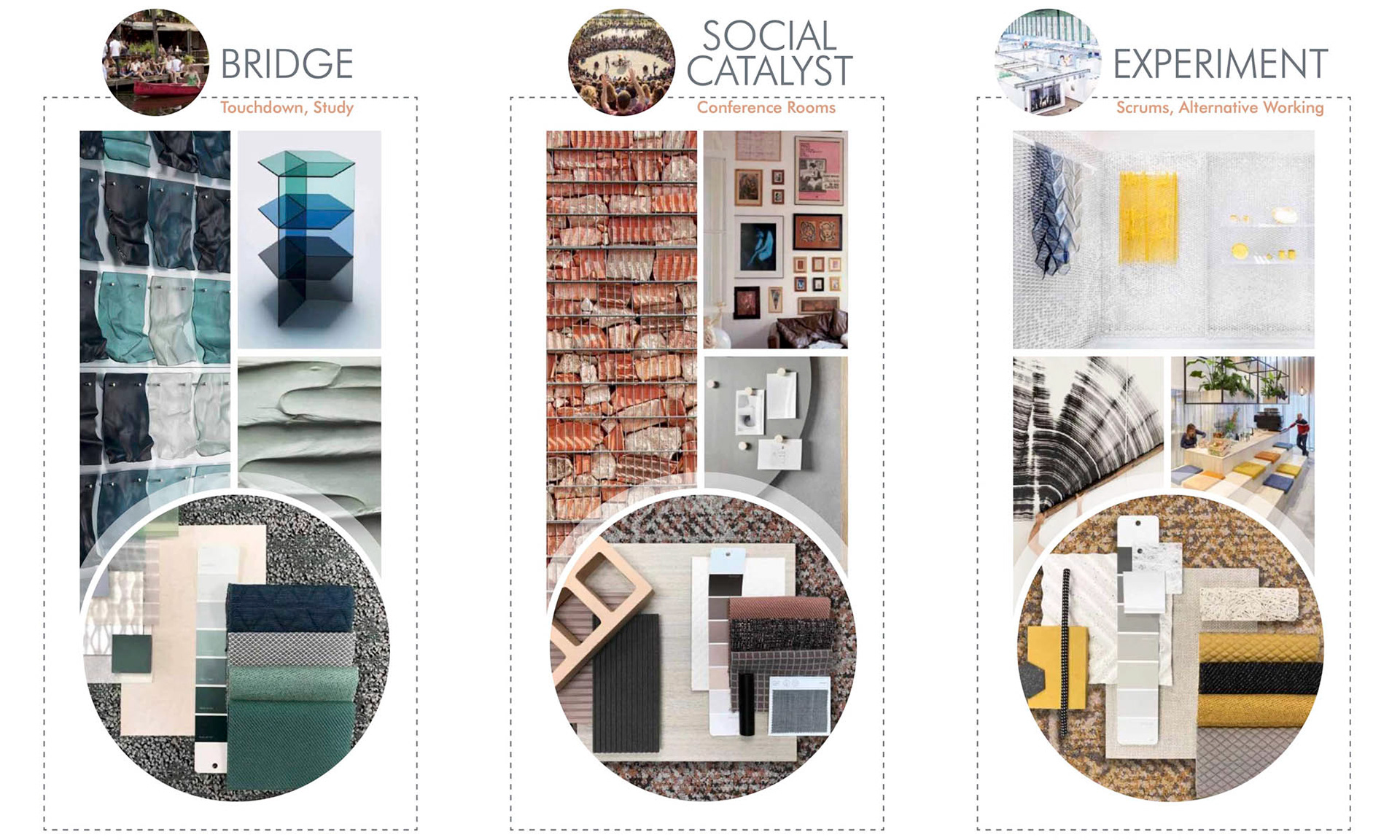
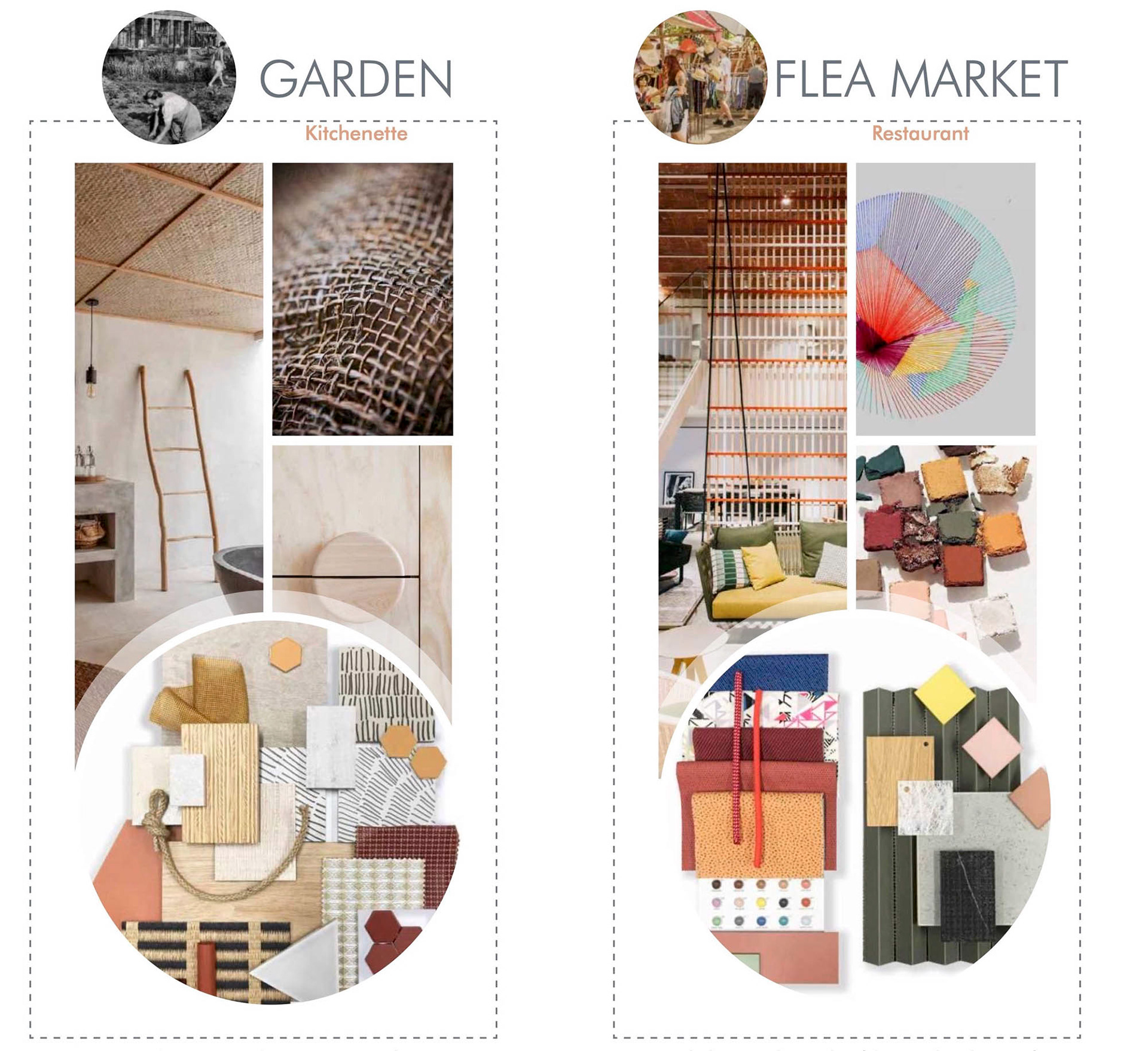
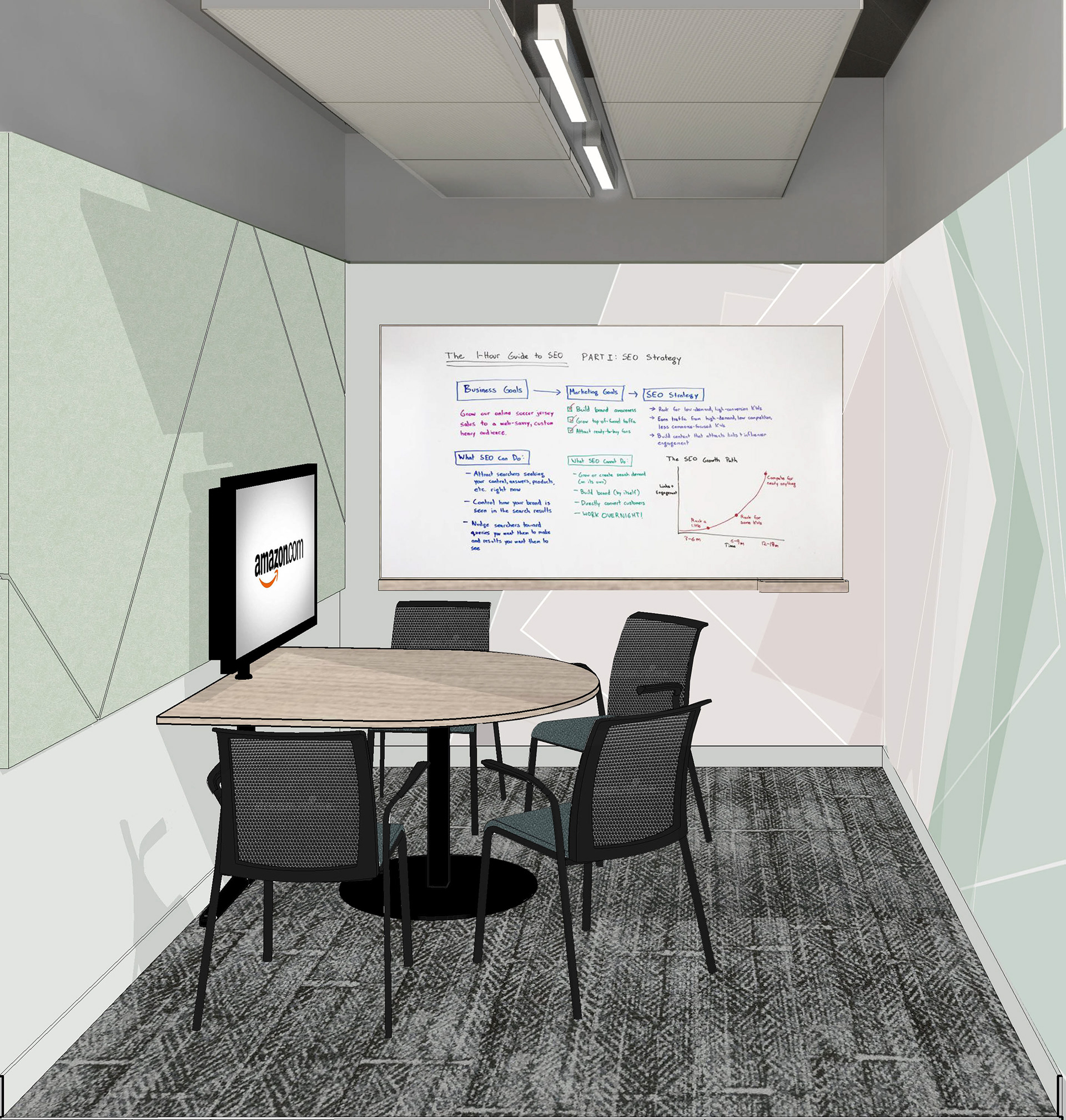
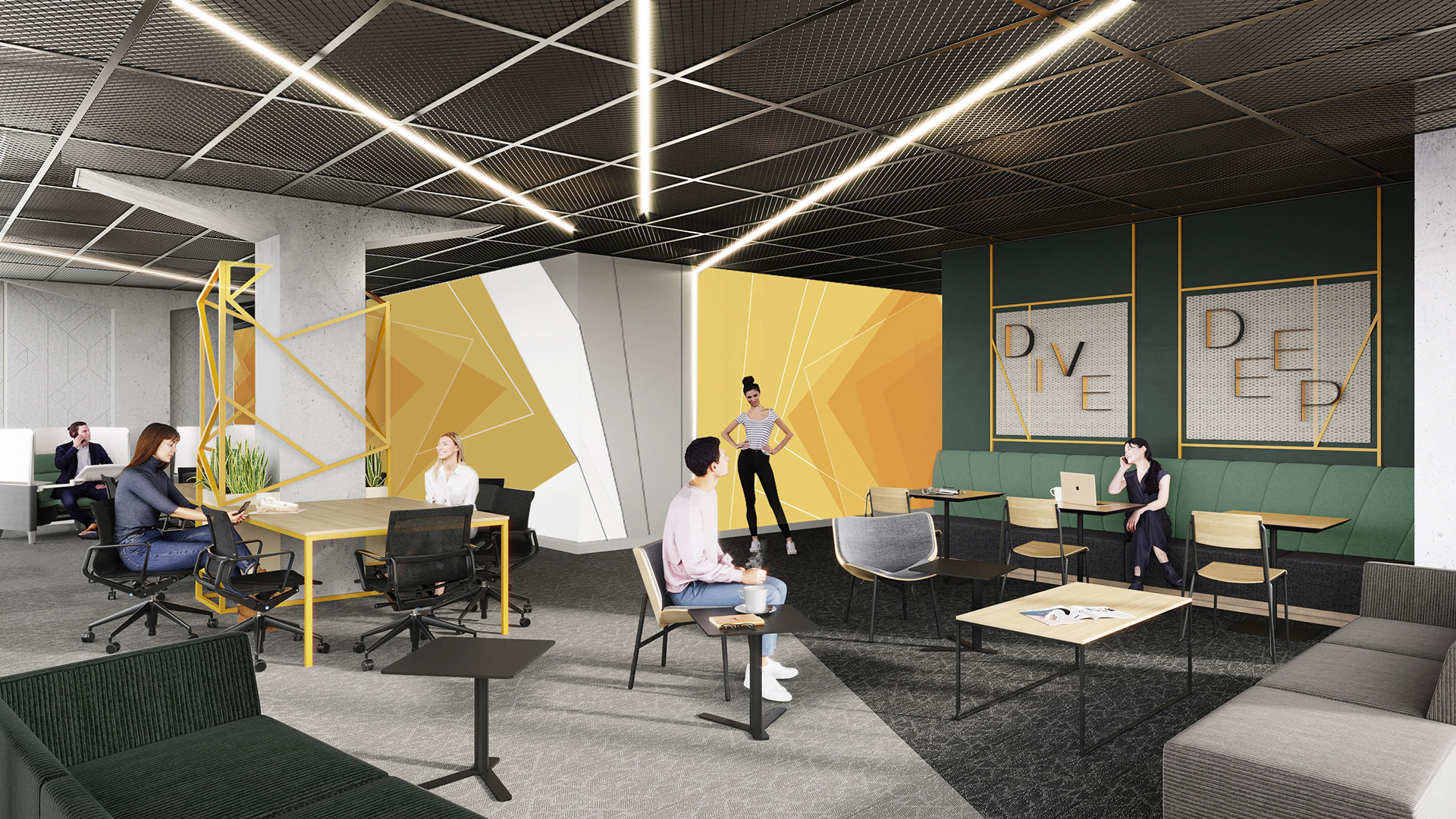
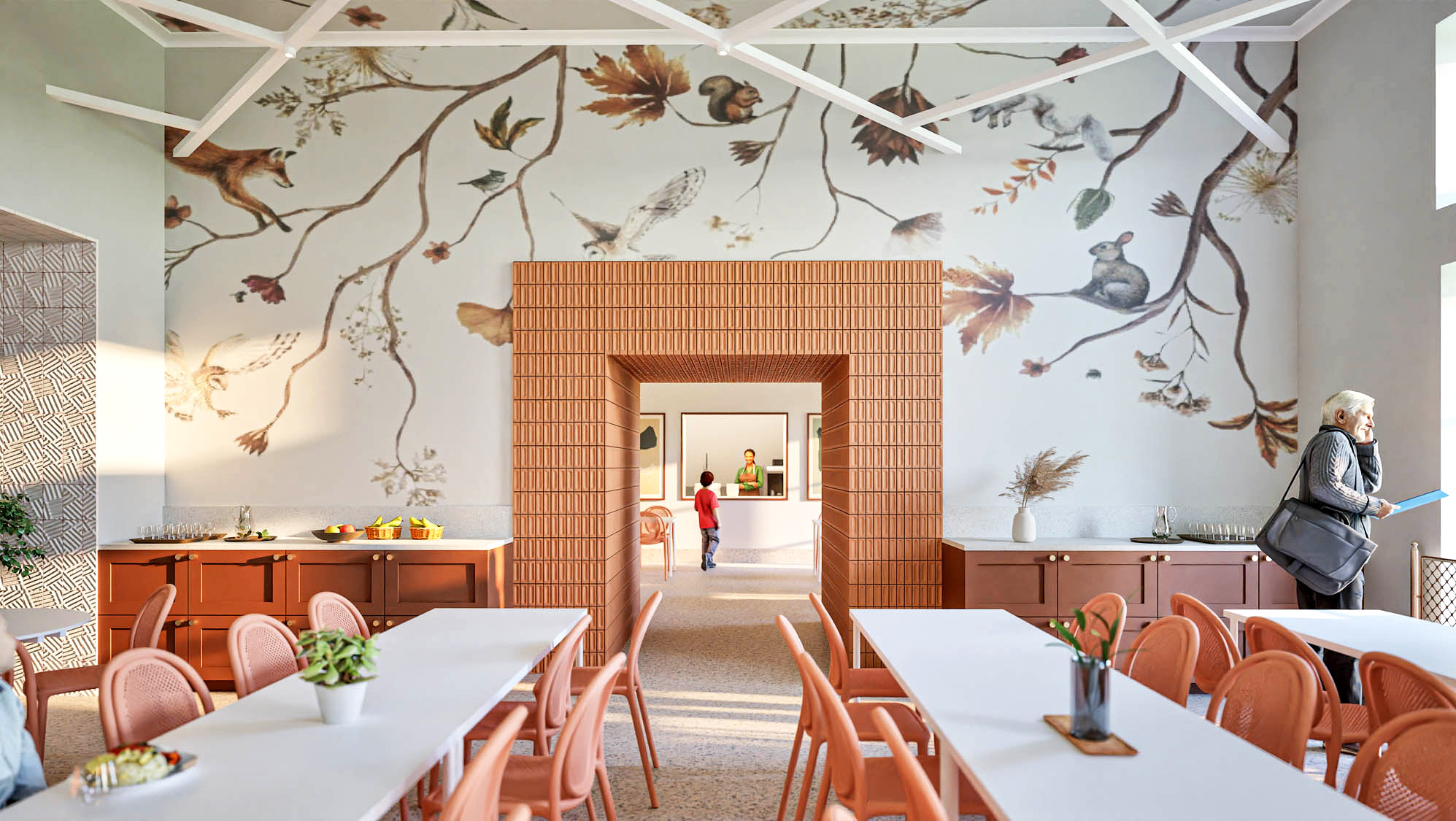
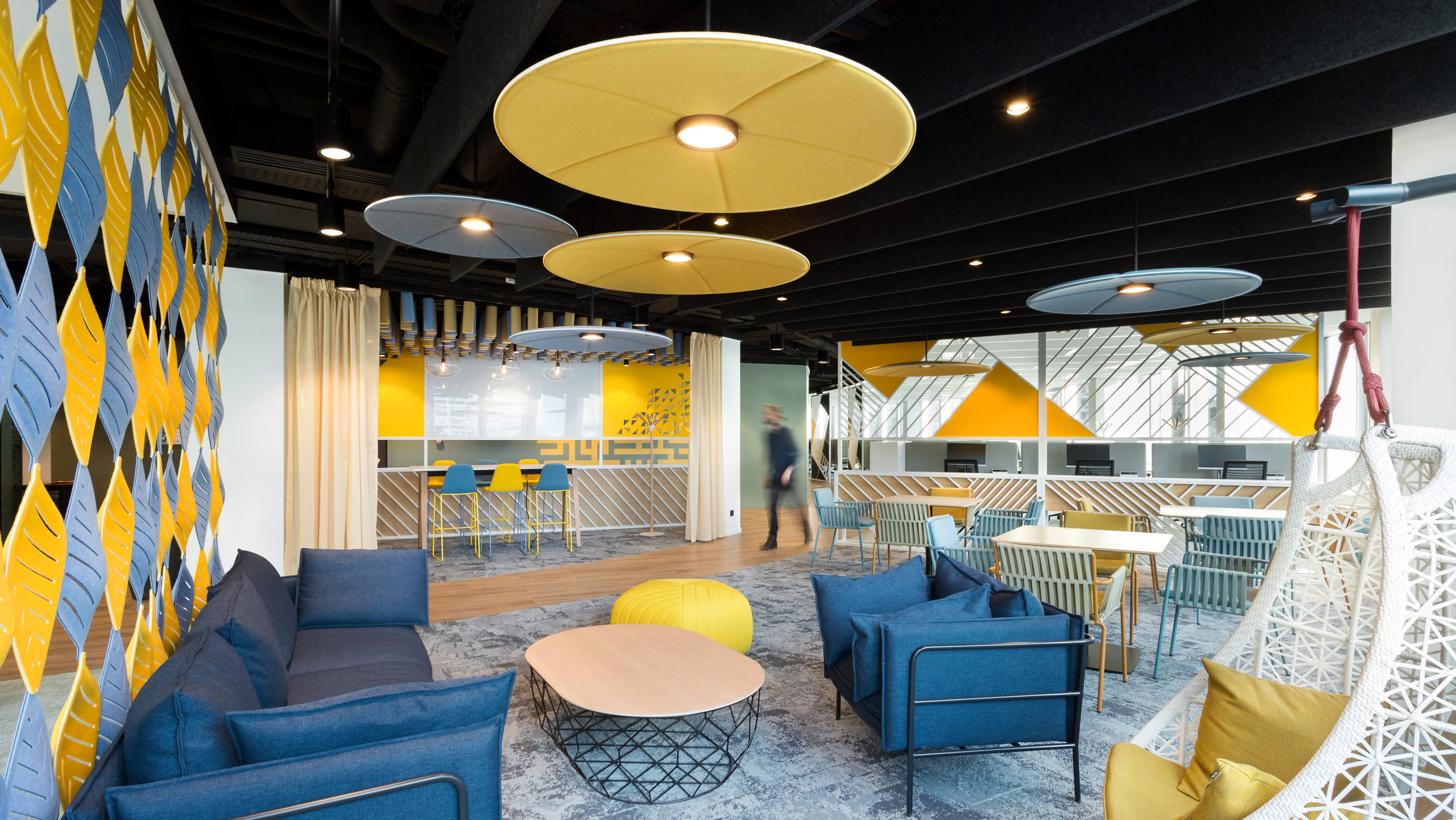
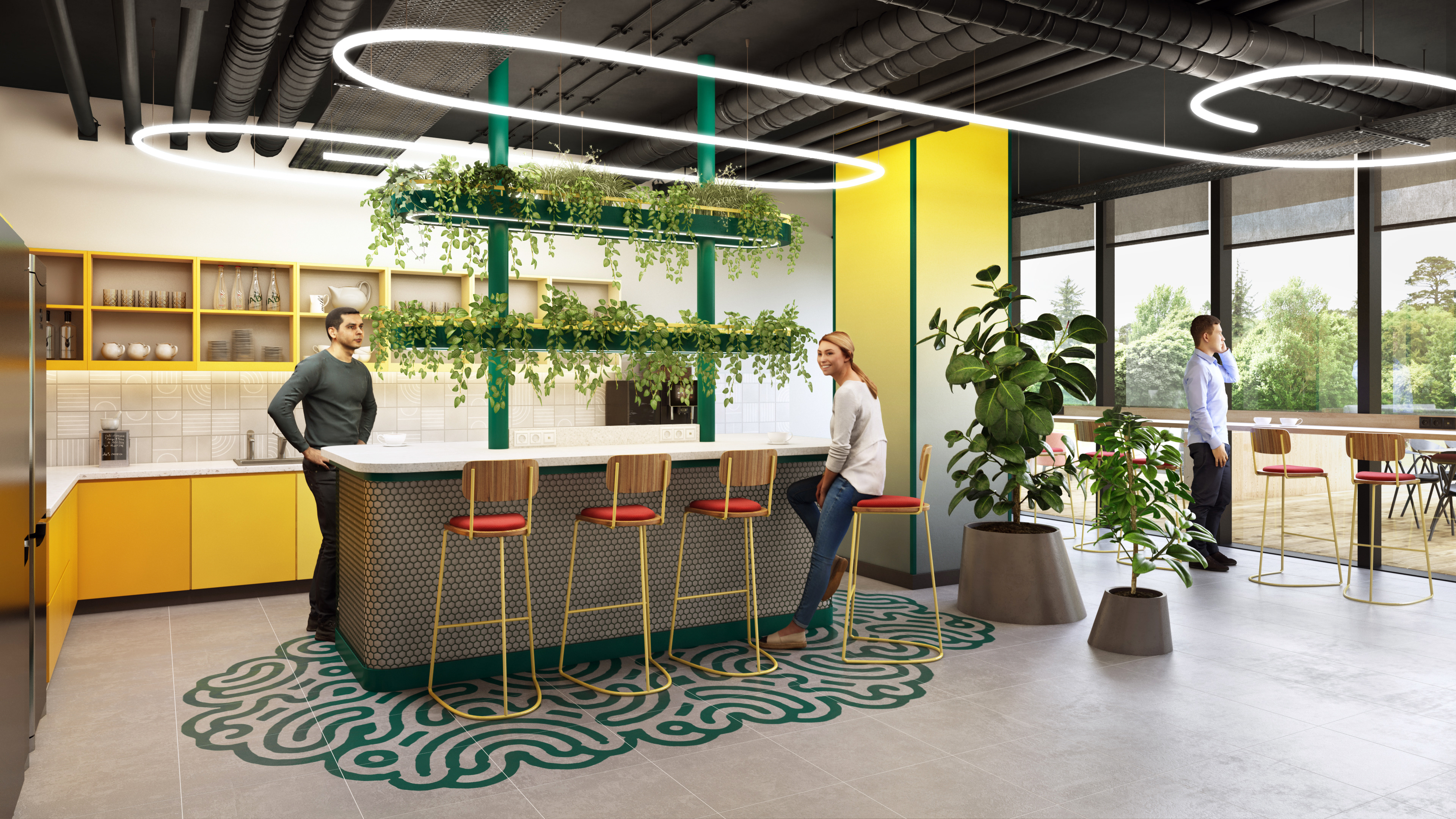
The enclosed spaces within the project follow the idea of the different urban voids, that each have unique characteristics and colour palette, whereas the general look and feel, expanding across all open areas, is inspired by vortex. The latter is largely created by rotating colour palettes, layering of different materials, directional floor finishes and lighting and the wall graphics that emphasise movement.
SIZE: 46 640 sqm
LOCATION: Berlin, Germany
MY ROLE: Interior Architect
VORTEX
Vortex is a centripetal force of air or water that through rapid circular motion pulls items around its core. For Amazon, this site is the home of Amazon Berlin as all sites will be consolidated here, pulling all teams and businesses under one roof. The location acts as a centroid of the local neighbourhood and immediate region. The building's architecture and planning when extracted illustrates elements of rotation as the balconies rotate around the facade.
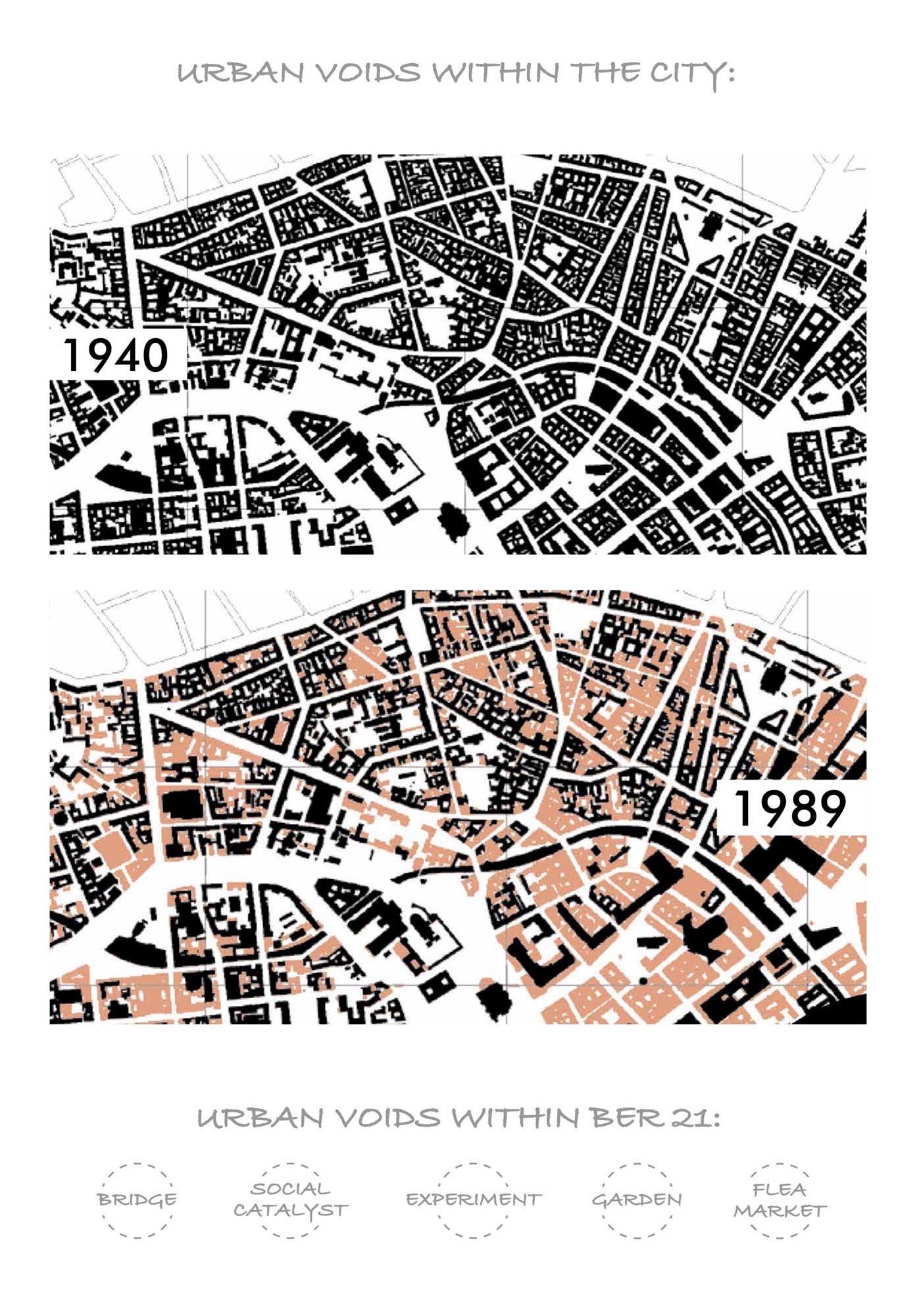
URBAN VOIDS WITHIN VORTEX
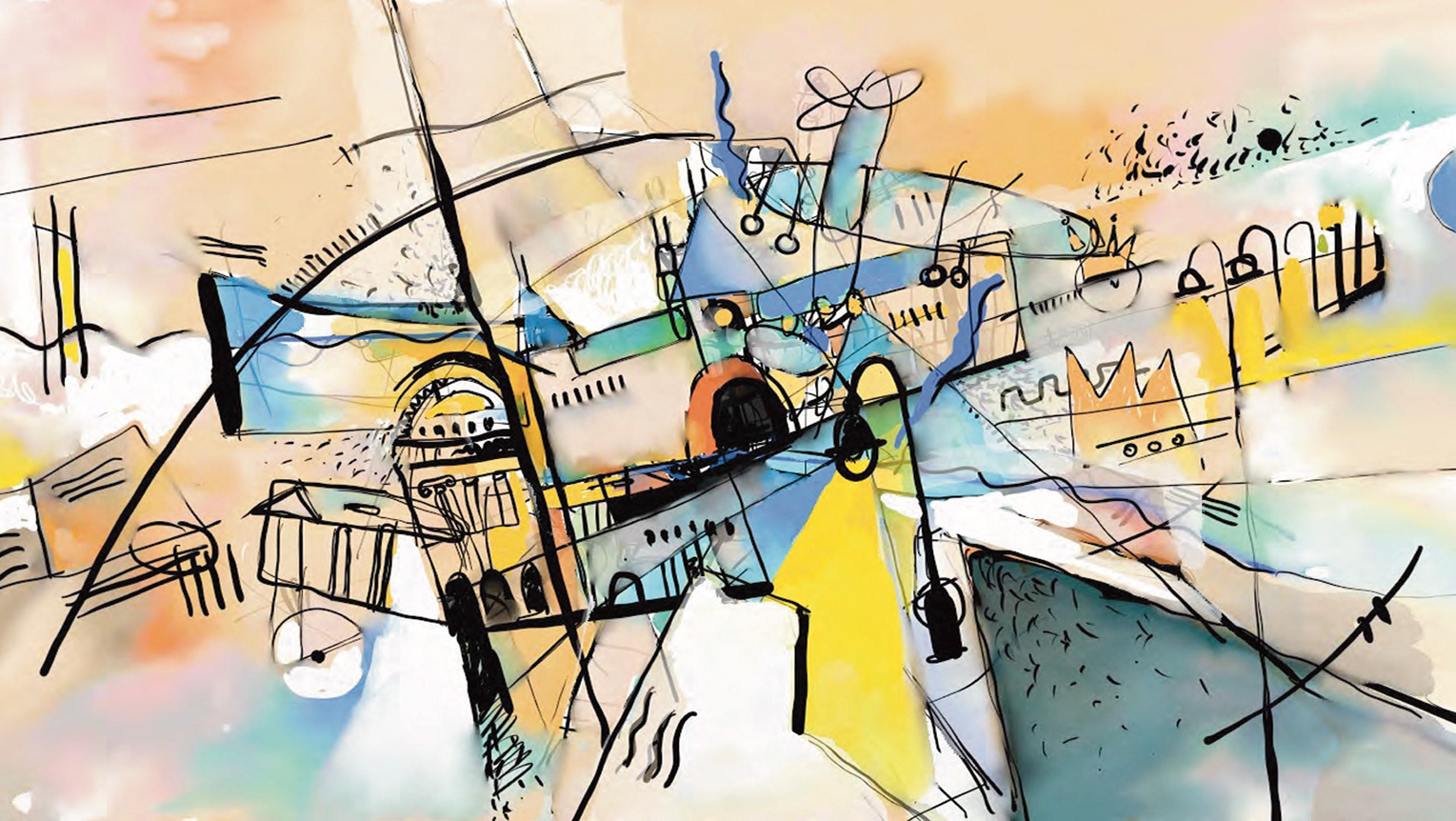
The city of Berlin has changed immensely over the years and one of those changes has been the countless areas that once used to have buildings, that now can be seen as urban voids. Over the time, these voids have adapted different uses and so Berlin could also be viewed as a ‘self-made city’ full of spaces that are reinvented, adapted for reuse through a process of self-organising and improvising. BER21, inspired by its surrounding, houses within itself five different types of voids.